Federal Student Loan Program Overhaul 2026: 6 Key Policy Shifts
Advertisements
The 2026 federal student loan program overhaul introduces six significant policy shifts, poised to redefine repayment options, interest rates, and eligibility criteria for millions of US borrowers, demanding careful attention from all stakeholders.
The landscape of higher education finance in the United States is perpetually shifting, and 2026 promises one of the most substantial transformations yet. The impending federal student loan program overhaul is not merely a tweak but a comprehensive reform designed to address long-standing issues, alleviate borrower burdens, and ensure the sustainability of the system. This overhaul will introduce six key policy shifts that stand to affect millions of US borrowers, from recent graduates to those deep into their repayment journeys. Understanding these changes now is crucial for anyone navigating the complexities of student debt and planning for their financial future.
redefining income-driven repayment (IDR) plans
One of the most significant aspects of the upcoming federal student loan program overhaul is the comprehensive rethinking of Income-Driven Repayment (IDR) plans. These plans have long been a lifeline for borrowers struggling to afford their monthly payments, tying their obligations to their discretionary income rather than a fixed amount. However, the existing IDR landscape has been criticized for its complexity, administrative hurdles, and sometimes, its failure to significantly reduce principal balances for long-term borrowers. The 2026 changes aim to simplify, streamline, and ultimately make IDR plans more effective and accessible.
The current system often involves multiple IDR options, each with different eligibility criteria, payment caps, and forgiveness timelines. This complexity can lead to confusion and underutilization by borrowers who might benefit most. The overhaul seeks to consolidate these plans or at least significantly simplify the application and recertification processes. The goal is to create a more intuitive experience, ensuring that borrowers can easily understand their options and enroll in the most beneficial plan without unnecessary friction.
simplifying application and recertification
A major pain point for borrowers has been the annual recertification process for IDR plans, which often requires submitting updated income and family size documentation. Failure to recertify on time can lead to payment spikes and capitalization of interest. The 2026 overhaul is expected to introduce mechanisms that simplify this, potentially through automated data sharing with the IRS, reducing the administrative burden on borrowers.
- Automated income verification to streamline annual recertification.
- Reduced paperwork and fewer manual submissions required from borrowers.
- Clearer communication regarding deadlines and consequences of non-compliance.
- Enhanced online portals for easier management of IDR plans.
Furthermore, the overhaul is anticipated to adjust the definition of “discretionary income,” which is the basis for calculating IDR payments. By increasing the percentage of income protected from repayment calculations, more borrowers could see lower monthly payments. This change would provide greater financial relief, particularly for those with lower incomes or larger family sizes, making education more affordable in the long run.
In essence, the reforms to IDR plans under the federal student loan program overhaul are designed to make these crucial safety nets more robust and user-friendly. By simplifying access and reducing administrative friction, the government aims to ensure that more borrowers can benefit from income-driven relief, preventing defaults and promoting financial stability. This focus on borrower-centric design is a key pillar of the broader reform.
adjustments to interest accumulation and capitalization
The way interest accrues and capitalizes on federal student loans has been a significant source of frustration and financial burden for many borrowers. Often, interest can capitalize, meaning unpaid interest is added to the principal balance, leading to a larger principal on which future interest is calculated. This phenomenon can trap borrowers in a cycle where their loan balance grows even as they make consistent payments. The 2026 federal student loan program overhaul is set to tackle this issue head-on, aiming to reduce the instances and impact of interest capitalization.
Currently, interest capitalization can occur in several situations, such as when a borrower exits deferment or forbearance, or when they fail to recertify their income for an IDR plan. These events can dramatically increase the total amount owed over the life of the loan. The proposed policy shifts intend to limit these capitalization events, potentially restricting them to only a few specific circumstances, or even eliminating them entirely in certain scenarios.
limiting capitalization triggers
One of the expected changes is a significant reduction in the number of events that trigger interest capitalization. This could mean that interest would no longer capitalize upon leaving deferment or forbearance, or that it would be limited to only severe cases of non-payment. Such a change would prevent loan balances from ballooning unexpectedly, providing more predictable and manageable debt trajectories for borrowers.
- Fewer instances where unpaid interest is added to the principal balance.
- Protection against compounding interest during periods of financial hardship.
- Clearer guidelines on when capitalization can and cannot occur.
- Potential elimination of capitalization for borrowers on certain IDR plans.
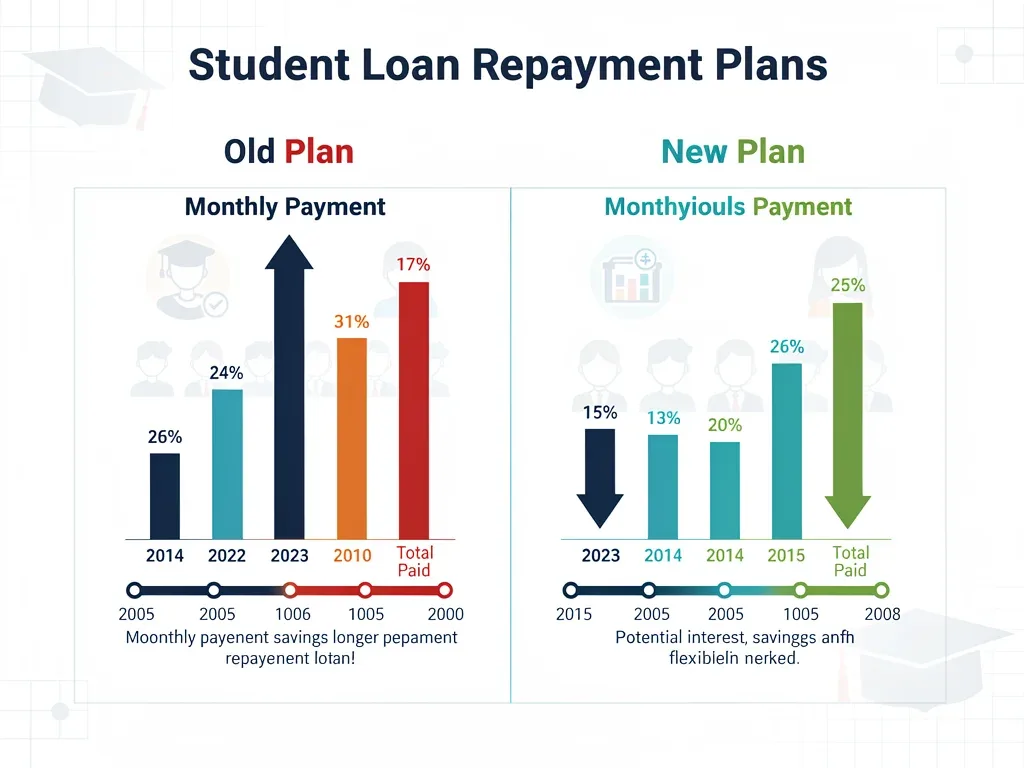
Beyond capitalization, the overhaul may also introduce new mechanisms to prevent interest from accumulating excessively, particularly for borrowers on IDR plans. For example, some proposals suggest that if a borrower’s IDR payment does not cover the full amount of accruing interest, the government might subsidize the remaining interest, preventing the loan balance from growing. This would be a monumental shift, providing genuine relief to those whose payments are very low due to their income.
The goal of these interest-related reforms within the federal student loan program overhaul is to ensure that borrowers are not penalized for utilizing financial relief programs or for experiencing temporary financial setbacks. By making interest accumulation and capitalization fairer and more transparent, the government aims to create a system where borrowers can make progress on their debt, rather than feeling overwhelmed by ever-increasing balances. This is a critical step towards a more equitable student loan system.
enhanced borrower protections and discharge options
For years, federal student loan borrowers have faced significant challenges when attempting to discharge their loans due to disability, death, or institutional misconduct. The processes have often been opaque, cumbersome, and difficult to navigate, leaving many eligible individuals without the relief they are entitled to. The 2026 federal student loan program overhaul is expected to introduce substantial improvements to borrower protections and expand discharge options, making these pathways to relief more accessible and less burdensome.
One key area of focus is disability discharge. Currently, borrowers must provide extensive documentation from medical professionals and often face lengthy review processes. The overhaul may streamline this process, potentially through automatic data matching with other federal agencies, such as the Social Security Administration, to identify eligible individuals without requiring them to apply. This would significantly reduce the administrative hurdles for those who are most vulnerable.
streamlining disability discharge
The reforms aim to make the Total and Permanent Disability (TPD) discharge process more humane and efficient. This could involve simplifying the application, broadening the definition of disability, or proactively identifying eligible borrowers through existing government databases. The intent is to ensure that individuals with profound disabilities are not burdened by student loan debt they cannot repay.
- Automatic TPD discharge for borrowers identified through federal databases.
- Simplified application process for those not automatically identified.
- Clearer communication about eligibility and required documentation.
- Reduced look-back periods for disability status verification.
Another crucial aspect of enhanced borrower protections relates to loan discharge due to institutional misconduct or school closure. Borrowers who attended schools that engaged in deceptive practices or abruptly closed often find themselves with significant debt and no degree to show for it. The overhaul is expected to strengthen the “borrower defense to repayment” process, making it easier for defrauded students to have their loans forgiven. This might include expanding the types of misconduct that qualify for discharge and simplifying the application process.
The overall objective of these enhanced protections in the federal student loan program overhaul is to create a safety net that genuinely supports borrowers facing dire circumstances. By making discharge options more accessible and less bureaucratic, the government aims to prevent situations where individuals are financially crippled by loans due to factors beyond their control, fostering a sense of fairness and accountability within the system.
changes to Pell Grant eligibility and usage
Pell Grants have historically been a cornerstone of federal financial aid, providing need-based assistance to low-income undergraduate students to help them afford college. The grants are a critical tool for promoting access to higher education and reducing the need for student loans. The 2026 federal student loan program overhaul is anticipated to include significant adjustments to Pell Grant eligibility and usage, aiming to expand access and increase the purchasing power of these grants.
One potential change is an increase in the maximum Pell Grant award. While Pell Grants are adjusted periodically, a substantial increase could significantly reduce the out-of-pocket costs for students from low-income backgrounds, thereby decreasing their reliance on loans. This would be a direct investment in affordability, making higher education more attainable for a broader segment of the population.
expanding eligibility criteria
Beyond increasing the award amount, the overhaul may also broaden the eligibility criteria for Pell Grants. This could involve adjusting the Free Application for Federal Student Aid (FAFSA) formula to allow more students to qualify based on their financial need. Expanding eligibility would mean more students receive this crucial grant aid, reducing their overall debt burden upon graduation.
- Increased maximum Pell Grant award to cover a larger portion of college costs.
- Adjustments to FAFSA calculations to make more students eligible.
- Potential expansion of Pell Grant eligibility to include some short-term programs.
- Greater flexibility in how Pell Grants can be used for living expenses.

Furthermore, the overhaul might introduce more flexibility in how Pell Grants can be used. Currently, their use is primarily tied to tuition, fees, and on-campus housing. The reforms could allow for greater use of Pell Grants for other educational expenses, such as books, supplies, transportation, and even off-campus living costs, which are often significant barriers for low-income students. This expanded flexibility would offer a more holistic approach to financial aid, acknowledging the full scope of costs associated with attending college.
The proposed changes to Pell Grant eligibility and usage within the federal student loan program overhaul underscore a commitment to equitable access to education. By making Pell Grants more generous and accessible, the government aims to reduce the financial strain on students from disadvantaged backgrounds, empowering them to pursue higher education with less reliance on potentially burdensome loans. This is a proactive step towards mitigating future student debt crises.
new repayment options for specific professions
Recognizing the critical role that certain professions play in society, and the often lower salaries associated with them, the 2026 federal student loan program overhaul is expected to introduce new or significantly enhanced repayment options tailored for specific professional fields. This initiative aims to incentivize individuals to enter and remain in public service or other high-need areas, knowing that their student loan burden will be more manageable.
The Public Service Loan Forgiveness (PSLF) program has been a powerful tool, but it has also been plagued by administrative complexities and a low approval rate, leading to widespread frustration. The upcoming overhaul is likely to address these issues, making PSLF more predictable, transparent, and accessible. This could involve automatic tracking of qualifying payments, simplified employer certification, and clearer criteria for forgiveness.
streamlining public service loan forgiveness (PSLF)
The reforms are expected to significantly streamline the PSLF program, which forgives the remaining balance on federal direct loans after 120 qualifying monthly payments while working full-time for a qualifying employer. The changes aim to reduce the confusion and high denial rates that have historically characterized the program, ensuring that those who dedicate their careers to public service receive the promised relief.
- Automated tracking of qualifying payments for PSLF.
- Simplified process for employer certification and verification.
- Expanded definition of qualifying employment or types of loans.
- Clearer communication and guidance for borrowers pursuing PSLF.
Beyond PSLF, the overhaul may also introduce new loan repayment assistance programs (LRAPs) or expand existing ones for professions such as teaching in underserved areas, nursing, or working in specific medical fields. These programs often provide direct financial assistance to help repay loans in exchange for a commitment to serve in a particular capacity or location. The goal is to address workforce shortages in critical sectors by making these careers more financially viable for graduates saddled with student debt.
The focus on new repayment options for specific professions within the federal student loan program overhaul represents a strategic investment in human capital. By alleviating the financial pressure on individuals pursuing vital but often lower-paying careers, the government aims to strengthen essential services and ensure that communities have access to the professionals they need. This policy shift acknowledges the broader societal benefits of supporting certain career paths.
increased accountability for higher education institutions
A crucial, yet often overlooked, aspect of the federal student loan program overhaul for 2026 is the heightened focus on institutional accountability. For too long, some higher education institutions have operated with little consequence for poor student outcomes, leaving graduates with substantial debt and limited career prospects. The upcoming reforms aim to shift some of the financial risk and responsibility back to the schools themselves, encouraging them to deliver better value and clearer pathways to success for their students.
This increased accountability could manifest in several ways. One potential change involves implementing stricter gainful employment regulations, particularly for vocational and for-profit programs. These regulations would require programs to demonstrate that their graduates are earning enough to repay their student loans, or risk losing access to federal financial aid. This would protect students from enrolling in programs that consistently fail to provide adequate return on investment.
performance-based funding models
The overhaul may introduce elements of performance-based funding, where a portion of an institution’s federal funding is tied to student outcomes such as graduation rates, loan repayment rates, and post-graduation earnings. This incentivizes schools to invest in student success and quality education, rather than simply enrolling as many students as possible.
- Stricter oversight of program effectiveness, especially for for-profit institutions.
- Linking federal aid eligibility to graduate employment and loan repayment rates.
- Increased transparency requirements for institutions regarding student outcomes.
- Potential penalties for institutions with consistently poor student loan default rates.
Furthermore, the overhaul might also impose greater transparency requirements on institutions regarding their costs, graduation rates, and post-graduate employment data. Prospective students and their families would have access to more comprehensive and easily understandable information, enabling them to make more informed decisions about where to pursue their education and how much debt to take on. This consumer-centric approach empowers individuals to choose programs that offer genuine value.
By increasing accountability for higher education institutions, the federal student loan program overhaul seeks to create a more responsible and effective ecosystem. The goal is to ensure that federal funds are directed towards institutions that genuinely serve their students’ best interests, ultimately leading to better educational outcomes and reducing the overall burden of student debt across the nation. This shift is vital for the long-term health of both students and the federal loan program.
long-term financial sustainability of the program
Any comprehensive reform of a system as vast as the federal student loan program must also address its long-term financial sustainability. The 2026 federal student loan program overhaul is not just about borrower relief; it also aims to ensure that the program remains viable and effective for future generations of students. This involves a delicate balancing act of providing support while also managing the financial obligations of the government.
One aspect of sustainability could involve recalibrating interest rates. While interest rates are largely market-driven, there might be policy adjustments to how these rates are set or capped, ensuring they are fair to borrowers while still covering the government’s cost of capital. This could mean exploring new formulas that are less volatile or more directly tied to the economic benefits of education.
exploring innovative funding mechanisms
The overhaul might also consider innovative funding mechanisms or risk-sharing models. This could involve exploring partnerships with private lenders, though likely with strict federal oversight, or experimenting with different ways to finance loans that reduce the burden on taxpayers while maintaining affordability for students. The goal is to diversify funding sources and reduce the government’s sole responsibility for all loan losses.
- Potential adjustments to federal student loan interest rate formulas.
- Exploration of risk-sharing models with educational institutions.
- New strategies for managing loan defaults and collections efficiently.
- Regular review and adjustment mechanisms to maintain fiscal health.
Another critical component of financial sustainability is the efficient management of loan defaults and collections. The overhaul may introduce more effective strategies for assisting borrowers who are at risk of default, such as enhanced counseling services or more proactive outreach. By preventing defaults, the government can reduce the costs associated with collections and ensure a higher repayment rate across the portfolio. This preventative approach is often more cost-effective than reactive collection efforts.
Ultimately, the long-term financial sustainability measures within the federal student loan program overhaul underscore a commitment to responsible fiscal stewardship. By implementing policies that balance borrower needs with program viability, the government aims to create a student loan system that is enduring, equitable, and capable of supporting educational attainment for decades to come. This forward-thinking approach is essential for the health of both the economy and the educational system.
| Key Policy Shift | Brief Description |
|---|---|
| IDR Plan Redefinition | Simplification and increased accessibility for Income-Driven Repayment plans, aiming for lower payments and easier recertification. |
| Interest Accumulation Changes | Limitations on interest capitalization and potential subsidies to prevent loan balances from growing due to unpaid interest. |
| Enhanced Borrower Protections | Streamlined processes for disability discharge and expanded relief for institutional misconduct or school closures. |
| Pell Grant Expansion | Increased award amounts and broadened eligibility criteria for Pell Grants to enhance college affordability. |
frequently asked questions about the 2026 federal student loan overhaul
What is the primary goal of the 2026 federal student loan program overhaul?▼The primary goal is to create a more equitable, efficient, and sustainable federal student loan system. This involves addressing borrower burdens, simplifying repayment processes, increasing access to financial aid, and enhancing institutional accountability to improve student outcomes and financial stability for millions of US borrowers.
How will the IDR plan changes affect my monthly payments?▼The overhaul aims to simplify IDR plans and potentially lower monthly payments for many borrowers. This could be achieved through a revised definition of discretionary income, protecting a larger portion of your earnings, and streamlining the recertification process to prevent payment spikes and administrative errors.
Will interest capitalization be eliminated under the new policies?▼While complete elimination may not occur, the overhaul is expected to significantly limit the instances of interest capitalization. This means fewer situations where unpaid interest is added to your principal balance, helping to prevent your loan from growing larger even as you make payments, particularly for those on IDR plans.
Are there new opportunities for loan forgiveness for specific professions?▼Yes, the overhaul is anticipated to streamline and enhance existing programs like Public Service Loan Forgiveness (PSLF) and potentially introduce new repayment assistance programs for high-need professions. The goal is to make these pathways to forgiveness more accessible and predictable for individuals serving in critical sectors.
How will these changes impact future students applying for federal aid?▼Future students are expected to benefit from increased Pell Grant eligibility and potentially larger award amounts, making higher education more affordable. Additionally, enhanced institutional accountability will encourage schools to provide better value, ensuring students take on debt for programs that genuinely lead to career success.
conclusion: navigating the new era of student loans
The federal student loan program overhaul for 2026 represents a pivotal moment for millions of US borrowers and the future of higher education finance. The six key policy shifts—redefining IDR plans, adjusting interest accumulation, enhancing borrower protections, reforming Pell Grants, introducing new professional repayment options, and increasing institutional accountability—collectively aim to create a more equitable, transparent, and sustainable system. These changes are not just bureaucratic adjustments; they are designed to offer genuine relief, improve access to education, and ensure that student debt remains a manageable stepping stone rather than an insurmountable barrier. As these reforms take effect, it will be crucial for current and prospective borrowers to stay informed, understand their new options, and proactively engage with the updated federal programs to maximize the benefits available to them. The path ahead promises significant improvements, requiring diligence and awareness from all stakeholders to navigate this new era successfully.