Maximize Miles: Advanced Airline Redemption for 2026 Travel
Advertisements
To unlock 20% more value from airline miles for 2026 travel, strategically leverage transfer bonuses, identify sweet spots in award charts, and utilize stopovers to maximize itinerary complexity and destination reach.
For savvy travelers, the pursuit of maximizing rewards is an ongoing journey. In 2026, the landscape of loyalty programs continues to evolve, making the art of unlocking 20% more value from your airline miles: advanced redemption strategies for 2026 travel more crucial than ever. This guide will navigate the intricacies of modern mileage redemption, ensuring your hard-earned points translate into extraordinary experiences.
Understanding the Evolving World of Airline Loyalty Programs
The airline industry is dynamic, with loyalty programs frequently adjusting their rules, award charts, and partner networks. Staying ahead of these changes is fundamental to maximizing the value of your miles. What worked last year might not be the most advantageous strategy for 2026 travel, necessitating a continuous learning approach to redemption.
Many airlines have shifted from fixed award charts to dynamic pricing, where the cost in miles fluctuates based on demand, cash price, and seasonality. This makes traditional ‘sweet spots’ harder to pinpoint but not impossible. It simply requires a more flexible and informed approach to searching and booking award travel.
The Shift to Dynamic Pricing and Its Implications
Dynamic pricing means that the number of miles required for a flight can change from day to day, or even hour to hour. This mirrors cash ticket pricing and presents both challenges and opportunities for mile collectors. Understanding how to navigate this system is key to finding value.
- Flexibility is paramount: Being open to different travel dates or even alternative destinations can significantly reduce the miles needed for a redemption.
- Early booking often helps: While not a guarantee, booking further in advance can sometimes lock in lower mileage rates before demand drives them up.
- Off-peak travel: Traveling during less popular seasons or days of the week almost always results in fewer miles required.
Despite dynamic pricing, many programs still offer excellent value, especially for premium cabin travel where the cash price is exceptionally high. The key is to compare the mileage cost against the cash price to determine if a redemption offers good value, often aiming for at least 1.5-2 cents per mile.
The evolving nature of airline loyalty programs demands a proactive stance from travelers. By understanding the underlying mechanics of dynamic pricing and keeping an eye on program updates, you can adapt your strategy to consistently find optimal redemption opportunities. This foundational knowledge sets the stage for more advanced techniques.
Mastering Transfer Bonuses for Enhanced Value
One of the most effective ways to significantly boost the value of your airline miles is by strategically leveraging transfer bonuses. These promotions, offered periodically by credit card rewards programs, allow you to transfer points to airline partners with an added percentage bonus, effectively increasing your mileage balance without earning more points.
These bonuses typically range from 15% to 50%, and sometimes even higher. A 20% bonus, for instance, means that 10,000 credit card points could become 12,000 airline miles. This immediate increase in your mileage currency can be a game-changer for securing premium cabin awards or longer international itineraries.
Identifying and Capitalizing on Lucrative Transfer Offers
Staying informed about current and upcoming transfer bonuses is critical. Many travel blogs and rewards websites actively track these promotions, providing timely alerts. Setting up notifications for your preferred credit card programs and airline partners can ensure you don’t miss out.
- Credit card point ecosystems: Major transferable points programs like Chase Ultimate Rewards, American Express Membership Rewards, Citi ThankYou Points, and Capital One Miles frequently offer transfer bonuses to various airline partners.
- Strategic timing: Only transfer points when you have a specific redemption in mind and a bonus is active. Points transferred to an airline program generally cannot be transferred back.
- Partner airline alliances: Understand which airlines are partners with your credit card programs and their respective alliances (Star Alliance, Oneworld, SkyTeam). A bonus to one airline can open up redemption opportunities across its entire alliance network.
The true power of transfer bonuses lies in their ability to unlock aspirational travel that might otherwise be out of reach. Imagine needing 100,000 miles for a business class flight. With a 25% transfer bonus, you’d only need to transfer 80,000 credit card points, saving you 20,000 points for future travel or another redemption. This is a direct path to unlocking significant additional value.
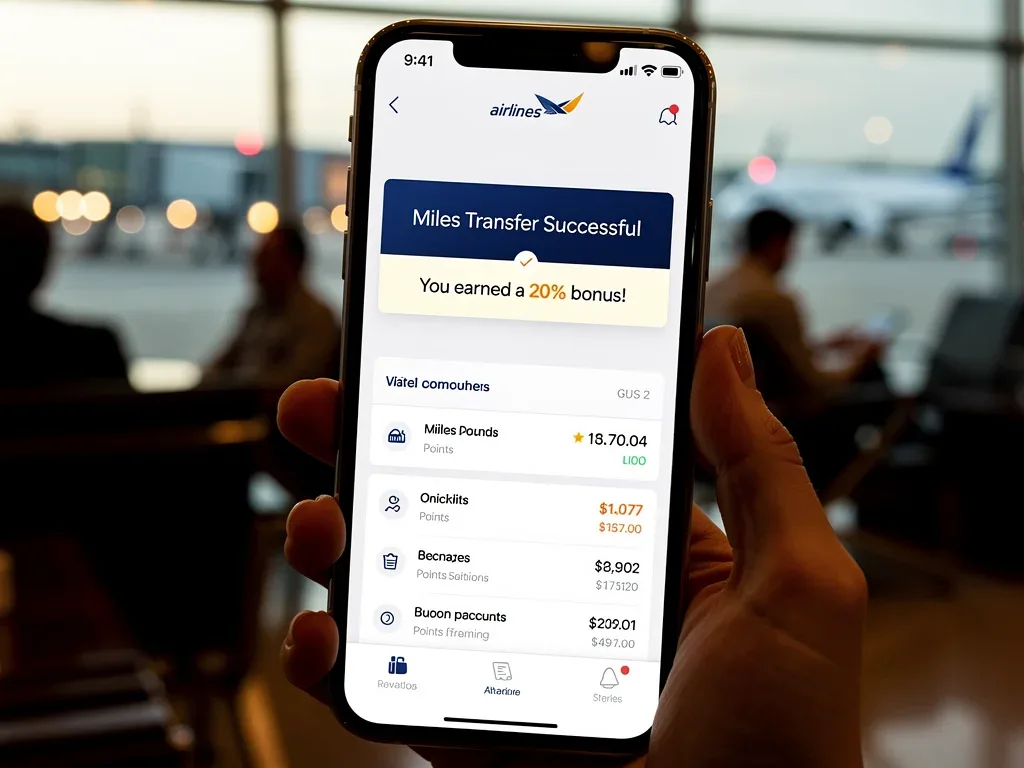
Always calculate the effective value of your miles after a bonus. If a bonus allows you to book a flight that would otherwise be too expensive in miles, it’s a strong indicator of a valuable redemption. This method alone can easily contribute to the goal of unlocking 20% more value from your airline miles for 2026 travel.
Leveraging Airline Partner Award Charts and Sweet Spots
Even in an era of dynamic pricing, specific airline partner award charts often hold hidden gems, commonly referred to as ‘sweet spots.’ These are redemption opportunities where the mileage cost for a particular route or class of service is disproportionately low compared to its cash value or the mileage cost through other programs. Finding and exploiting these sweet spots requires diligent research and a good understanding of airline alliances.
Many airlines publish award charts for flights on their partner carriers, which can sometimes be more favorable than using the operating carrier’s own program. For example, using Avianca LifeMiles to book Star Alliance flights, or Alaska Airlines Mileage Plan for Oneworld partners like Cathay Pacific, can yield exceptional value for premium cabins.
Researching and Exploiting Alliance Partners
The three major airline alliances (Star Alliance, Oneworld, and SkyTeam) allow you to use miles from one member airline to book flights on another. This interconnectedness is where many sweet spots emerge. The key is to identify which program offers the best rates for the flights you want, even if you didn’t earn miles directly with that program.
- Star Alliance: United, Lufthansa, Singapore Airlines, etc. Programs like Avianca LifeMiles or Aeroplan (Air Canada) are often cited for good Star Alliance redemptions.
- Oneworld: American Airlines, British Airways, Cathay Pacific, etc. Alaska Airlines Mileage Plan and Qantas Frequent Flyer can be excellent for Oneworld partner awards.
- SkyTeam: Delta, Air France, KLM, Korean Air, etc. Virgin Atlantic Flying Club sometimes offers good redemptions on Delta, and Air France/KLM Flying Blue can have promotional rates.
The strategy involves earning transferable points from credit cards and then transferring them to the partner airline program that offers the best award chart for your desired route. For example, if you want to fly business class to Asia, you might find that using 75,000 miles with one partner airline is significantly cheaper than 120,000 miles with another, even for the same flight.
Always cross-reference award costs across multiple partner programs before making a transfer. This meticulous comparison is essential for ensuring you are truly getting the most value. By carefully navigating partner award charts, travelers can consistently find opportunities that offer well over 20% more value than standard redemptions, especially when combined with transfer bonuses.
Maximizing Stopovers and Open-Jaws for Multi-City Trips
Beyond simply booking a round-trip ticket, advanced travelers utilize stopovers and open-jaws to create multi-city itineraries that offer incredible value. A stopover allows you to stay in an intermediate city for more than 24 hours (or 4 hours for domestic flights in some programs) before continuing to your final destination, often for little to no additional mileage cost. An open-jaw allows you to fly into one city and depart from another, or return to a different city than your origin.
These features can transform a single award redemption into a journey encompassing multiple destinations, effectively stretching the value of your miles significantly. Instead of booking two separate awards for two cities, a single award with a stopover can cover both, saving a considerable amount of miles.
Implementing Stopover and Open-Jaw Strategies
Not all airline programs permit stopovers or open-jaws on award tickets, and the rules vary widely. It is crucial to research the specific policies of the airline program you plan to use. Some of the most generous programs for stopovers include:
- Alaska Airlines Mileage Plan: Known for allowing a free stopover on one-way international award tickets. This means you can visit two cities for the price of one flight.
- United MileagePlus: Offers the “Excursionist Perk,” allowing a free one-way flight within a region on certain round-trip itineraries.
- Air Canada Aeroplan: Permits stopovers for a small fee (usually around 5,000 miles) on award tickets, making multi-city trips more accessible.
To book these complex itineraries, you often need to call the airline’s reservations desk, as online booking engines may not always display these options. Be prepared with your desired route, dates, and flight numbers to facilitate the process. This planning ensures a smooth booking experience for your advanced redemption.

The strategic use of stopovers and open-jaws can turn a simple trip into an elaborate adventure, all while using fewer miles than booking separate flights. This approach is particularly powerful for international travel, where the cost of individual segments can be high. By incorporating these techniques, you are directly contributing to unlocking 20% more value from your airline miles for 2026 travel, enhancing your travel experiences without increasing your mileage spend.
Navigating Fuel Surcharges and Taxes
While airline miles cover the base fare of a flight, travelers are still responsible for paying taxes and, in some cases, significant fuel surcharges. These additional costs can sometimes negate the value of a mileage redemption, especially for international premium cabin flights. Understanding how to minimize or avoid these fees is a critical advanced strategy.
Fuel surcharges (sometimes called carrier-imposed surcharges) are notoriously high with certain airlines, notably British Airways, Lufthansa, and Virgin Atlantic, particularly for business or first-class awards. These surcharges can run into hundreds or even thousands of dollars, making a ‘free’ flight feel anything but.
Strategies to Reduce Out-of-Pocket Costs
The key to minimizing these extra costs lies in strategic program selection and route planning. Not all airline programs pass on fuel surcharges in the same way, and some airlines impose them more heavily than others. Careful research can save you a substantial amount of money.
- Choose programs that don’t pass on surcharges: Airlines like United MileagePlus, Avianca LifeMiles, and Singapore Airlines KrisFlyer generally have lower or no fuel surcharges on their own flights and often on partner awards.
- Fly specific partners: Even if your chosen program typically passes on surcharges, certain partners might be exempt. For example, using American Airlines AAdvantage miles on partner Japan Airlines usually incurs lower surcharges than on British Airways.
- Consider alternative routes: Sometimes, flying through a different hub or with a different alliance partner can drastically reduce the cash co-pay.
Before transferring any points or committing to a redemption, always check the total cash cost, including all taxes and fees. Websites like AwardHacker or the airline’s own award search engine can provide estimates. If the cash component is high, it might be worth exploring alternative redemption options or even paying cash for the flight if the mileage value is poor.
By actively managing and minimizing fuel surcharges and taxes, you ensure that the value you derive from your airline miles remains high. This proactive approach to managing the cash component of award tickets is a vital part of unlocking 20% more value from your airline miles for 2026 travel, ensuring your trips are truly rewarding and cost-effective.
Leveraging Elite Status for Enhanced Redemption Opportunities
Airline elite status, while primarily known for perks like upgrades and lounge access, can also significantly enhance your mileage redemption experience. Elite members often gain access to more award availability, priority waitlisting, and sometimes even discounted mileage rates, adding another layer to advanced redemption strategies.
The benefits vary by airline and status tier, but generally, higher-tier elites will see the most pronounced advantages. This can be particularly impactful when trying to book highly sought-after premium cabin awards on popular routes, where general availability is scarce.
Exclusive Benefits for Elite Members
Elite status can provide a crucial edge in the competitive world of award travel. These benefits are often unadvertised but can make a substantial difference in securing the best redemptions.
- Priority award availability: Some airlines release additional award seats to their elite members before making them available to the general public. This can be a goldmine for premium cabin bookings.
- Reduced change/cancellation fees: Elite status often waives or reduces fees for changing or canceling award tickets, providing greater flexibility and peace of mind.
- Dedicated elite service desks: Access to specialized customer service agents who are more knowledgeable about complex award bookings and can assist with difficult itineraries.
If you hold elite status, always log into your loyalty account before searching for award availability. The award space you see might be different (and better) than what a non-elite member sees. Furthermore, don’t hesitate to call the elite service desk for assistance with complex bookings or to inquire about waitlisting for preferred flights.
While earning elite status requires significant travel or credit card spending, the benefits for mileage redemption can be substantial. For those who already possess status, actively leveraging these privileges is a clear path to unlocking 20% more value from your airline miles for 2026 travel, making your journeys smoother and more luxurious.
Strategic Planning and Flexibility for 2026 Travel
The most sophisticated aspect of unlocking maximum value from airline miles for 2026 travel is not just knowing the individual strategies, but seamlessly integrating them with meticulous planning and a healthy dose of flexibility. The best redemptions often require foresight, adaptability, and a willingness to explore various options.
Given the ever-changing nature of award availability and program rules, a rigid approach rarely yields the best results. Instead, successful mileage hackers maintain a robust understanding of their options and are prepared to pivot when necessary, securing optimal value even when initial plans fall through.
Key Elements of a Successful Redemption Strategy
A multi-faceted approach combines all the advanced techniques discussed, ensuring no stone is left unturned in the quest for value. This involves continuous monitoring and proactive engagement with your loyalty programs.
- Start early: Award space, especially in premium cabins, is limited. Begin your search as soon as the booking window opens (typically 11-12 months out) for the best selection.
- Be flexible with dates and airports: If your travel dates are not fixed, use flexible date search tools. Consider flying into or out of smaller, nearby airports which might have better award availability.
- Set up alerts: Use tools like ExpertFlyer or Award Nexus to set up alerts for specific award space if your desired flights aren’t immediately available.
- Have backup plans: Always have alternative routes, dates, or even destination ideas in mind. If your first choice isn’t available, a well-researched backup can still lead to a fantastic redemption.
The ability to combine transfer bonuses with sweet spot redemptions, incorporate stopovers, and minimize surcharges, all while being flexible with your travel plans, is the hallmark of an expert mile redeemer. This holistic strategy is what truly pushes the boundaries of value, enabling you to consistently achieve more than the advertised worth of your miles.
Ultimately, unlocking 20% more value from your airline miles for 2026 travel is about being an informed, patient, and adaptable traveler. By embracing these advanced strategies, you transform your miles from a simple currency into a powerful tool for crafting unforgettable and luxurious travel experiences.
| Key Strategy | Brief Description |
|---|---|
| Transfer Bonuses | Boost miles by transferring credit card points to airlines during promotional periods. |
| Sweet Spots & Partners | Find disproportionately low mileage costs on specific routes via partner airline award charts. |
| Stopovers & Open-Jaws | Visit multiple cities on a single award ticket, maximizing itinerary value without extra miles. |
| Minimize Surcharges | Strategically choose airlines and programs to avoid high fuel surcharges and taxes. |
Frequently Asked Questions About Advanced Miles Redemption
What is a “sweet spot” in airline miles redemption?▼A “sweet spot” refers to a specific award redemption that offers exceptionally high value due to a disproportionately low mileage cost for a particular route, class, or partner airline, often found by leveraging alliance partner award charts.
How do transfer bonuses increase mile value?▼Transfer bonuses increase mile value by adding a percentage of extra miles when you convert credit card points to an airline loyalty program. For example, a 25% bonus means 10,000 points become 12,500 miles, directly boosting your redemption power.
Can elite status truly help with award availability?▼Yes, elite status can often grant access to expanded award inventory, priority waitlisting, and dedicated service lines. These benefits make it easier to secure premium cabin seats or popular routes that are otherwise scarce for general members.
What are the best ways to avoid high fuel surcharges?▼To avoid high fuel surcharges, choose airline programs known for low or no surcharges (e.g., United, Avianca LifeMiles). Also, select routes or partner airlines that historically have lower fees, or consider alternative origin/destination airports.
Why is flexibility important for advanced mile redemptions?▼Flexibility is crucial because award availability fluctuates, and program rules change. Being open to different dates, airports, or even destinations allows you to seize unexpected opportunities and adapt to dynamic pricing, ultimately securing better value.
Conclusion
Mastering the art of advanced airline miles redemption for 2026 travel is a continuous journey that rewards diligent planning and strategic execution. By embracing techniques such as leveraging transfer bonuses, identifying and exploiting partner award chart sweet spots, strategically utilizing stopovers and open-jaws, and actively minimizing fuel surcharges, travelers can significantly enhance the value of their hard-earned miles. The evolving landscape of loyalty programs demands an informed and flexible approach, transforming what might seem like complex systems into a powerful toolkit for unlocking extraordinary travel experiences. Ultimately, these advanced strategies are not just about saving money; they are about amplifying travel possibilities and making aspirational journeys a tangible reality, consistently delivering well over 20% more value from your airline miles.