US Small Business Lending Trends 2026: Q1 Approvals Drop 8%
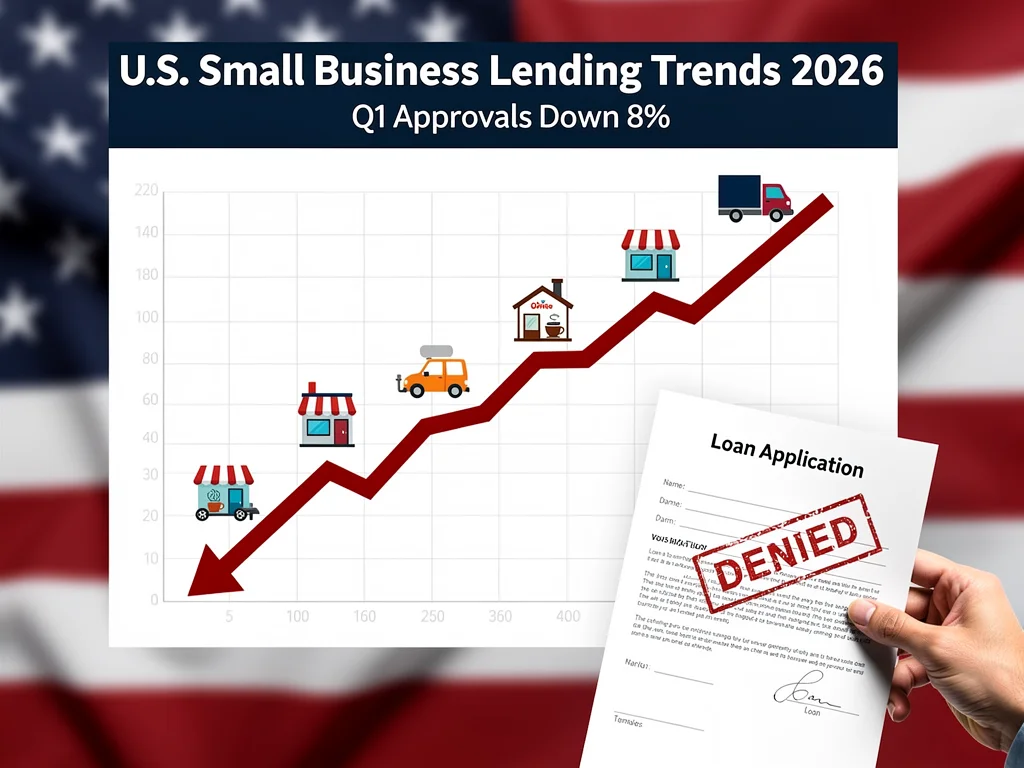
In Q1 2026, US small business lending saw an 8% drop in loan approvals, signaling a tightening credit market. This shift demands entrepreneurs adapt their strategies, exploring alternative financing and strengthening financial health to secure vital capital.
Por: Maria Eduarda em 26 de maio de 2026
Última atualização em: 26 de junho de 2026
Advertisements
In Q1 2026, US Small Business Lending experienced an 8% decline in loan approvals, indicating a more cautious credit environment that necessitates strategic adjustments for entrepreneurs seeking capital.
Advertisements
The landscape of US Small Business Lending is undergoing significant shifts, as evidenced by an 8% drop in Q1 2026 loan approvals. This notable decline carries substantial implications for entrepreneurs across the nation, challenging traditional funding avenues and prompting a reevaluation of financial strategies. Understanding the root causes and potential repercussions of this trend is crucial for any small business owner navigating the current economic climate.
Understanding the Q1 2026 Lending Downturn
The first quarter of 2026 has presented a challenging picture for small businesses seeking capital, with a reported 8% decrease in loan approvals. This downturn isn’t merely a statistic; it reflects a broader economic narrative influenced by various factors, from evolving monetary policies to shifting risk appetites among lenders. Analyzing this trend requires a deep dive into the underlying forces at play.
Several key indicators suggest that this decline is a multifaceted issue, not solely attributable to one cause. Lenders are becoming more stringent, often demanding higher credit scores and more robust business plans. This increased scrutiny is a direct response to perceived economic uncertainties and a desire to mitigate risk in a fluctuating market.
Economic Factors Influencing Lending Decisions
The broader economic environment plays a pivotal role in shaping lending policies. Inflationary pressures, interest rate adjustments by the Federal Reserve, and global economic instability can significantly impact a lender’s willingness to extend credit. When the economic outlook is uncertain, banks and other financial institutions often adopt a more conservative stance.
Interest Rate Hikes: Rising interest rates increase the cost of borrowing, potentially reducing demand for loans and making lenders more cautious about default risks.
Inflationary Pressures: High inflation can erode purchasing power and business profitability, leading lenders to question the repayment capacity of borrowers.
Market Volatility: Unpredictable market conditions can deter investment and expansion, making lenders hesitant to finance ventures in unstable sectors.
Moreover, regulatory changes, though perhaps less dramatic than economic shifts, can also contribute to a tightening of credit. New compliance requirements might increase operational costs for lenders, which can then be passed on to borrowers through stricter criteria or higher rates. Understanding these interconnected factors is essential for any entrepreneur trying to secure funding in this environment.
In conclusion, the Q1 2026 lending downturn is a complex phenomenon driven by a confluence of economic headwinds and evolving lending practices. Small businesses must recognize these dynamics to better prepare their loan applications and explore all available financing options.
Impact on Entrepreneurs and Small Businesses
The 8% drop in loan approvals in Q1 2026 for US Small Business Lending has profound implications for entrepreneurs. Access to capital is the lifeblood of small businesses, fueling everything from daily operations to expansion plans and innovation. When this access becomes restricted, the ripple effects can be felt across various aspects of a business.
For many small businesses, traditional bank loans are the primary, if not sole, source of external funding. A reduction in approval rates means that a significant number of viable businesses might be left without the capital they need to grow, or even to sustain existing operations. This can stifle job creation, limit market competition, and ultimately impact local economies.
Challenges in Securing Growth Capital
Without adequate funding, businesses face an uphill battle. They might struggle to invest in new equipment, hire additional staff, or launch new products and services. This can lead to stagnation, making it difficult to compete with larger, more financially robust companies.
Operational Constraints: Limited capital can hinder day-to-day operations, affecting inventory management, supplier payments, and cash flow.
Reduced Innovation: Without funds for research and development, businesses may be unable to innovate, falling behind competitors in rapidly evolving markets.
Stifled Expansion: Growth opportunities, such as opening new locations or entering new markets, become unattainable without the necessary financial backing.
The psychological toll on entrepreneurs should also not be underestimated. The constant struggle to secure funding can be draining, diverting valuable time and resources away from core business activities. This can lead to increased stress and, in some cases, even force business owners to scale back ambitions or consider closing their doors.
The impact extends beyond individual businesses to the broader entrepreneurial ecosystem. A climate of reduced lending can discourage new venture creation, as aspiring business owners perceive the funding landscape as too challenging. This could lead to a less dynamic and innovative small business sector in the long run.
Navigating the Tightening Credit Market
In response to the challenging environment in US Small Business Lending, entrepreneurs must adopt proactive strategies to navigate the tightening credit market. This involves not only understanding why loans are becoming harder to secure but also actively seeking out and preparing for alternative funding avenues. Adaptability and foresight are more critical than ever.
One of the most important steps is to meticulously review and strengthen your business’s financial health. Lenders, facing increased risk, will scrutinize every detail of an application, from credit scores to cash flow projections. Presenting a strong financial profile can significantly improve your chances of approval, even in a cautious market.
Strategies for Loan Application Success
Even with tighter lending conditions, securing a loan is still possible with the right approach. It requires thorough preparation and a clear understanding of what lenders are looking for.
Improve Credit Scores: Both personal and business credit scores are paramount. Work to pay down debts and ensure timely payments to improve your standing.
Develop a Robust Business Plan: A well-articulated business plan demonstrating a clear path to profitability and repayment capacity is essential. Include detailed financial projections and market analysis.
Maintain Strong Financial Records: Accurate and up-to-date financial statements, including profit and loss statements, balance sheets, and cash flow projections, are crucial for demonstrating financial health.
Beyond the application itself, building relationships with financial institutions can also be beneficial. A long-standing relationship with a bank, where your business has maintained accounts and demonstrated financial responsibility, might offer a slight advantage. This personal connection can sometimes make a difference when applications are being reviewed.
Furthermore, consider seeking advice from financial advisors or business consultants who specialize in small business financing. Their expertise can help you identify potential weaknesses in your application and recommend strategies for improvement, increasing your likelihood of success.
Ultimately, navigating a tightening credit market demands a comprehensive approach that combines strong financial management with strategic planning and, if necessary, expert guidance. Entrepreneurs who embrace these strategies will be better positioned to secure the funding they need.
Exploring Alternative Funding Sources
Given the challenges in traditional US Small Business Lending, exploring alternative funding sources has become an imperative for entrepreneurs. The market for small business financing is diverse, extending far beyond conventional bank loans. These alternatives can offer flexibility and accessibility that traditional routes might lack, especially during periods of tighter credit.
Diversifying your funding strategy not only increases your chances of securing capital but also reduces reliance on a single source, making your business more resilient to market fluctuations. From government-backed programs to private lenders and innovative financial technologies, the options are expanding, requiring entrepreneurs to be informed and proactive.
Types of Non-Traditional Financing
Alternative funding encompasses a broad spectrum of options, each with its own advantages and suitability depending on a business’s specific needs and stage of development.
SBA Loans: The Small Business Administration (SBA) offers various loan programs, often guaranteed by the government, making them less risky for lenders and more accessible for small businesses.
Online Lenders: Online platforms often provide quicker approval processes and more flexible terms than traditional banks, catering to businesses that might not meet stringent bank criteria.
Venture Capital and Angel Investors: For high-growth potential businesses, equity financing from venture capitalists or angel investors can provide substantial capital in exchange for a share of ownership.
Crowdfunding: Platform-based crowdfunding allows businesses to raise capital from a large number of individuals, often through rewards-based, equity-based, or debt-based models.
Invoice Factoring: Selling unpaid invoices to a third party at a discount provides immediate cash flow, particularly useful for businesses with long payment cycles.
Each of these alternatives comes with its own set of requirements, interest rates, and repayment structures. Entrepreneurs must carefully evaluate which option best aligns with their business model, growth objectives, and financial capacity. For instance, SBA loans often have competitive rates and longer repayment terms but can still involve a detailed application process through participating lenders.
Moreover, the rise of financial technology (fintech) has democratized access to capital, with many platforms leveraging data analytics to assess creditworthiness more broadly than traditional institutions. This innovation can be a game-changer for businesses previously overlooked by conventional lenders.
In conclusion, while traditional lending may be tightening, a wealth of alternative funding sources remains available. Entrepreneurs who actively research and strategically pursue these options can secure the capital necessary to thrive, even in a challenging environment.
Government Initiatives and Support for Small Businesses
In light of the evolving US Small Business Lending landscape, government initiatives and support programs are becoming increasingly vital for entrepreneurs. These programs are designed to bridge funding gaps, stimulate economic growth, and provide resources that might not be available through private channels. Understanding and leveraging these initiatives can be a critical success factor for small businesses facing financing hurdles.
The federal government, through agencies like the Small Business Administration (SBA), consistently offers a range of programs aimed at supporting small enterprises. These initiatives often come in the form of loan guarantees, grants, and educational resources, all intended to foster a more robust and resilient small business sector. State and local governments also frequently offer complementary programs tailored to regional economic needs.
Key Government Programs and Resources
Entrepreneurs should familiarize themselves with the various government-backed resources available, as these can provide crucial lifelines during periods of economic uncertainty or tighter credit.
SBA Loan Programs: Beyond the flagship 7(a) loan, the SBA offers specific programs like microloans for smaller amounts, 504 loans for real estate and equipment, and disaster loans for businesses affected by declared disasters.
Grant Opportunities: While less common for general business operations, federal and state grants are available for specific purposes such as research and development, innovation, or businesses in underserved communities.
Business Counseling and Training: The SBA, SCORE, and Small Business Development Centers (SBDCs) provide free or low-cost counseling, workshops, and training on business planning, financial management, and marketing.
These resources are not just about direct funding; they also provide invaluable expertise and guidance that can help entrepreneurs strengthen their business models and improve their financial literacy. For example, SBDCs can assist in preparing comprehensive business plans and financial projections, which are essential for any loan application, traditional or alternative.
Furthermore, government contracts can represent a significant revenue stream for small businesses. Agencies often have set-aside goals for contracting with small and disadvantaged businesses, providing opportunities that might otherwise be out of reach. Navigating the federal contracting landscape can be complex, but dedicated resources are available to help.
In summary, government initiatives play a crucial role in supporting small businesses, particularly when traditional lending becomes more restrictive. Entrepreneurs should actively explore and utilize these programs to secure funding, gain expertise, and enhance their overall business viability.
Forecasting Future Lending Prospects for 2026
Looking beyond Q1, forecasting future US Small Business Lending prospects for the remainder of 2026 requires careful consideration of ongoing economic trends and policy decisions. While the initial quarter showed a decline, the lending environment is dynamic and subject to change. Entrepreneurs must remain agile and informed to anticipate potential shifts and adapt their strategies accordingly.
Analysts are closely watching indicators such as inflation rates, employment figures, and consumer spending patterns. A stabilization or improvement in these economic metrics could signal a more favorable lending climate, potentially leading to a rebound in loan approvals. Conversely, persistent economic headwinds might mean continued caution from lenders.
Key Indicators to Monitor
Several economic and market factors will shape the trajectory of small business lending throughout 2026. Keeping an eye on these indicators can help entrepreneurs make informed decisions about their financing strategies.
Federal Reserve Policy: Future interest rate decisions by the Federal Reserve will directly impact the cost of borrowing and the overall liquidity in the credit market.
Inflation Trends: A sustained decrease in inflation could alleviate pressure on lenders and borrowers, potentially fostering a more relaxed lending environment.
Employment Data: Strong employment growth often correlates with increased consumer confidence and spending, which can positively influence business performance and lending activity.
Consumer Spending: Robust consumer spending indicates a healthy economy, encouraging businesses to expand and lenders to support their growth.
The role of technology in lending is also expected to evolve. Fintech platforms may continue to gain market share, offering more streamlined and data-driven lending solutions. This could provide new avenues for businesses that find traditional banking challenging, further diversifying the lending landscape.
Furthermore, regulatory bodies might introduce new policies or adjust existing ones in response to economic conditions. These changes could either ease or tighten lending requirements, underscoring the importance of staying abreast of legislative developments that impact financial markets.
In conclusion, while Q1 2026 presented a challenging start, the future of US Small Business Lending remains fluid. By closely monitoring economic indicators and being prepared to adapt, entrepreneurs can position themselves to capitalize on any improvements in the lending environment or effectively navigate continued challenges.
Strategies for Entrepreneurial Resilience
In an environment marked by tightening US Small Business Lending, cultivating entrepreneurial resilience is paramount. This goes beyond merely seeking funding; it involves building a robust business foundation that can withstand economic shocks and adapt to changing market conditions. Resilience is about strategic foresight, operational efficiency, and a commitment to continuous improvement.
Entrepreneurs must focus on strengthening internal business processes and financial management practices. This includes optimizing cash flow, managing expenses effectively, and building a solid financial buffer. A healthy balance sheet and strong operational performance will not only make a business more attractive to lenders but also more capable of self-funding growth when external capital is scarce.
Building a Stronger Business Foundation
Developing resilience involves a multi-pronged approach that addresses various aspects of business operations and financial health.
Cash Flow Management: Implement rigorous cash flow forecasting and management practices to ensure liquidity and minimize reliance on external financing for day-to-day operations.
Expense Optimization: Regularly review and optimize operational expenses. Lean operations can free up capital for reinvestment or to weather economic downturns.
Diversify Revenue Streams: Relying on a single product or service can be risky. Explore new markets, products, or service offerings to create multiple income sources.
Customer Retention: Focus on building strong customer relationships and loyalty. A stable customer base provides predictable revenue and reduces marketing costs.
Beyond financial strategies, investing in human capital is also crucial. A skilled and adaptable workforce can drive innovation and efficiency, allowing a business to pivot quickly in response to market changes. Training and development programs can enhance employee capabilities and foster a culture of continuous learning.
Networking with other entrepreneurs, industry leaders, and mentors can also provide invaluable insights and support. Sharing experiences and strategies can help small business owners navigate common challenges and identify new opportunities, fostering a sense of community and collective resilience.
Ultimately, entrepreneurial resilience in the face of evolving US Small Business Lending trends is about creating a business that is not only profitable but also adaptable, efficient, and well-prepared for future challenges. By focusing on these core principles, entrepreneurs can ensure long-term sustainability and growth.
Key Trend
Brief Description
Q1 2026 Lending Drop
US small business loan approvals fell by 8%, indicating a tightening credit market.
Economic Influences
Inflation, interest rates, and market volatility contribute to lender caution.
Alternative Funding
Entrepreneurs must explore SBA loans, online lenders, and crowdfunding.
Resilience Strategies
Focus on cash flow, expense optimization, and diversifying revenue streams.
Frequently Asked Questions About Small Business Lending
What caused the 8% drop in US small business loan approvals in Q1 2026?▼
The 8% drop was primarily influenced by a combination of economic factors including rising interest rates, persistent inflationary pressures, and increased market volatility. Lenders have adopted a more cautious approach, scrutinizing applications more rigorously due to perceived higher risks.
How does this lending trend affect entrepreneurs seeking capital?▼
This trend makes it harder for entrepreneurs to secure traditional loans, potentially stifling growth, innovation, and expansion plans. Businesses may face operational constraints and increased difficulty in accessing the necessary funds for investment and daily operations.
What alternative funding sources should small businesses consider?▼
Entrepreneurs should explore options like SBA-backed loans, online lenders, venture capital, angel investors, and crowdfunding platforms. Invoice factoring and government grants for specific purposes can also provide viable alternatives to traditional bank loans.
What steps can businesses take to improve their chances of loan approval?▼
To improve approval chances, businesses should focus on enhancing both personal and business credit scores, developing a robust and detailed business plan, and maintaining accurate and transparent financial records. Seeking advice from financial experts is also beneficial.
What is the outlook for US small business lending for the rest of 2026?▼
The outlook remains dynamic. Future trends will depend on Federal Reserve policies, inflation rates, and employment data. While Q1 was challenging, potential economic stabilization could lead to a more favorable lending environment later in the year, but caution is advised.
Conclusion
The 8% drop in US Small Business Lending approvals during Q1 2026 underscores a significant shift in the credit market, presenting both challenges and opportunities for entrepreneurs. While traditional funding avenues may be tightening, the need for capital remains critical for growth and sustainability. Businesses must respond by strengthening their financial foundations, meticulously preparing loan applications, and proactively exploring the diverse landscape of alternative funding sources. Government programs and initiatives also serve as crucial support systems, offering vital resources and guidance. By adopting strategies of resilience, adaptability, and informed decision-making, entrepreneurs can navigate this evolving environment effectively, ensuring their ventures not only survive but continue to thrive amidst changing economic currents. The path forward demands vigilance and a strategic approach to secure the lifeblood of small business: accessible capital.
A journalism student and passionate about communication, she has been working as a content intern for 1 year and 3 months, producing creative and informative texts about decoration and construction. With an eye for detail and a focus on the reader, she writes with ease and clarity to help the public make more informed decisions in their daily lives.