Maximize Rewards 2026: Hidden 5% Cash Back Categories
Advertisements
To maximize credit rewards 2026, cardholders should focus on verified 5% categories, activation deadlines, spending caps and merchant classification rules.
Major issuers already publish many of their 2026 bonus categories, making speculation about hidden future sectors less useful than tracking confirmed offers.
Chase, Discover and U.S. Bank each use different 5% structures, so the strongest strategy depends on aligning real household spending with each program.
How 5% Cash Back Programs Actually Work in 2026
Five-percent rewards are usually limited by quarterly spending caps, activation requirements or category selection rather than applying automatically to every purchase.
Some cards rotate categories chosen by the issuer, while others allow cardholders to select preferred categories from a predefined list.
Understanding those differences is essential because two cards advertising “5% cash back” can produce very different annual rewards.
Rotating Categories Require Attention
Cards such as Chase Freedom Flex and Discover it Cash Back change elevated earning categories during the year.
Cardholders generally need to activate the quarterly offer before qualifying purchases receive the advertised 5% rate.
Missing the activation window can reduce the value of an otherwise strong category even when the purchase itself would normally qualify.
Spending Caps Limit Maximum Earnings
Chase Freedom Flex applies its quarterly 5% bonus to up to $1,500 in combined purchases across the activated categories.
Discover uses the same $1,500 quarterly ceiling for its rotating 5% Cashback Bonus program after activation.
Once those caps are reached, additional purchases generally return to the card's ordinary base earning rate.
Chase Freedom Flex Q1 2026 Categories
Chase opened 2026 with dining, Norwegian Cruise Line and eligible American Heart Association donations as its rotating 5% categories.
The promotion ran from January through March and required activation under the Freedom and Freedom Flex quarterly program.
This first quarter showed that Chase's 2026 strategy mixed an everyday category with specific merchants and charitable giving.
Dining Was the Most Practical Q1 Category
Dining offered broad usefulness because many households already spend regularly at restaurants, takeout establishments and eligible delivery services.
For Freedom Flex holders, dining was especially notable because the card already earns an elevated year-round rate on eligible restaurant purchases.
Cardholders should always review Chase's reward stacking language because quarterly bonuses can interact with existing category benefits.
Chase Freedom Flex Q2 2026 Categories
During the second quarter, Chase shifted its 5% rotation toward Amazon, Chase Travel and eligible Feeding America donations.
These categories created opportunities for online shoppers and travelers rather than concentrating primarily on ordinary local purchases.
As with other Chase quarters, the bonus required activation and remained subject to the program's combined quarterly spending ceiling.
Amazon Offered Broad Shopping Flexibility
Amazon can cover many household purchases, but buying more solely for rewards would undermine the financial value of earning 5% cash back.
The best use of the category was routing purchases that were already planned through the card during the eligible quarter.
Large discretionary purchases should still be evaluated on total price rather than assuming a 5% rebate makes every Amazon purchase worthwhile.
Chase Freedom Flex Q3 2026 Categories
Chase's third-quarter 2026 categories included gas stations, public transit, EV charging, select live entertainment and eligible United Way donations.
The combination broadened transportation rewards beyond gasoline by including both public transit and electric-vehicle charging.
This made the quarter especially relevant to commuters whose transportation costs span multiple forms rather than one fuel category.
Transportation Categories Became More Inclusive
Traditional cash-back cards historically focused heavily on gas stations, but current reward structures increasingly recognize other mobility expenses.
Public transit and EV charging can provide meaningful value for urban commuters and electric-vehicle owners who spend less at conventional gas stations.
The category mix illustrates why reading the current quarterly calendar is more useful than relying on assumptions from previous years.
Chase Freedom Flex Q4 2026 Categories
For October through December 2026, Chase announced grocery stores, dining and eligible American Red Cross donations as its current 5% categories.
Grocery purchases at Walmart and Target are specifically excluded from the grocery-store category under the published Chase terms.
Cardholders can earn 5% on up to $1,500 in combined eligible purchases after activating the quarterly promotion.
Dining Can Reach an Effective 7% on Freedom Flex
Chase explains that Freedom Flex dining purchases can combine the ordinary dining bonus with the activated quarterly category during Q4 2026.
Because the base 1% is counted only once, eligible dining purchases can earn up to 7% total rather than a simple 8% addition.
This stacking rule makes Q4 dining one of the strongest verified opportunities for eligible Freedom Flex cardholders in 2026.
Grocery Store Coding Still Matters
A grocery purchase qualifies according to how the merchant is categorized rather than merely according to what the customer buys.
Supercenters and excluded retailers can therefore fail to receive the grocery-store bonus even when the basket contains ordinary food products.
Checking Chase's merchant-list guidance can prevent planning around purchases that ultimately earn only the standard rate.
Discover's 2026 5% Calendar Is Fully Published
Discover has published its entire 2026 rotating calendar, allowing cardholders to evaluate the year's categories instead of relying on predictions.
The structure includes grocery, restaurants, home improvement, transportation, drug stores, entertainment and utilities across different quarters.
Each quarter requires activation and applies the 5% Cashback Bonus to up to $1,500 of qualifying purchases.
Discover Q1 Focused on Grocery and Streaming
From January through March, Discover offered 5% at grocery stores, wholesale clubs and select streaming services.
This combination covered recurring household expenses alongside entertainment subscriptions, providing relatively broad everyday usefulness.
Specific merchant eligibility still depended on Discover's definitions and merchant coding rather than every possible food or streaming transaction.
Discover Q2 2026: Restaurants and Home Improvement
From April through June, Discover's 5% categories were restaurants and home improvement stores on up to $1,500 after activation.
This quarter could be especially valuable for homeowners planning repairs or renovations alongside regular dining expenses.
Large project purchases can reach the quarterly limit quickly, so cardholders should track cumulative eligible spending throughout the period.
Do Not Overspend to Reach the Cap
The $1,500 limit is a maximum amount eligible for the elevated rate, not a spending target that cardholders need to reach.
If a household naturally spends only $700 in the category, buying an additional $800 unnecessarily would destroy the benefit of the rewards.
Cash back is most valuable when applied to purchases that would have occurred regardless of the promotion.
Discover Q3 2026: Gas, Transportation and Drug Stores
Discover moved to gas stations, transportation and drug stores for the July-through-September quarter of 2026.
This created a broad transportation opportunity while also adding a healthcare-related retail category commonly used throughout the year.
The exact treatment of purchases depended on the merchant classification assigned to the transaction by the payment network.
Pharmacy Purchases Can Be Tricky
A pharmacy counter located inside another retailer may not code the same way as a standalone drug store.
This distinction can determine whether a transaction receives the 5% category bonus even when the customer buys the same type of product.
Reviewing past transaction coding can help cardholders estimate whether a frequently used merchant is likely to qualify.
Discover Q4 2026: Restaurants, Entertainment and Utilities
From October through December, Discover offers 5% Cashback Bonus at restaurants, entertainment and utilities after quarterly activation.
The entertainment category covers several qualifying merchant types, including movie theaters, amusement parks, attractions and certain live-event sellers.
Utilities create another opportunity because recurring household bills can generate rewards without changing normal spending behavior.
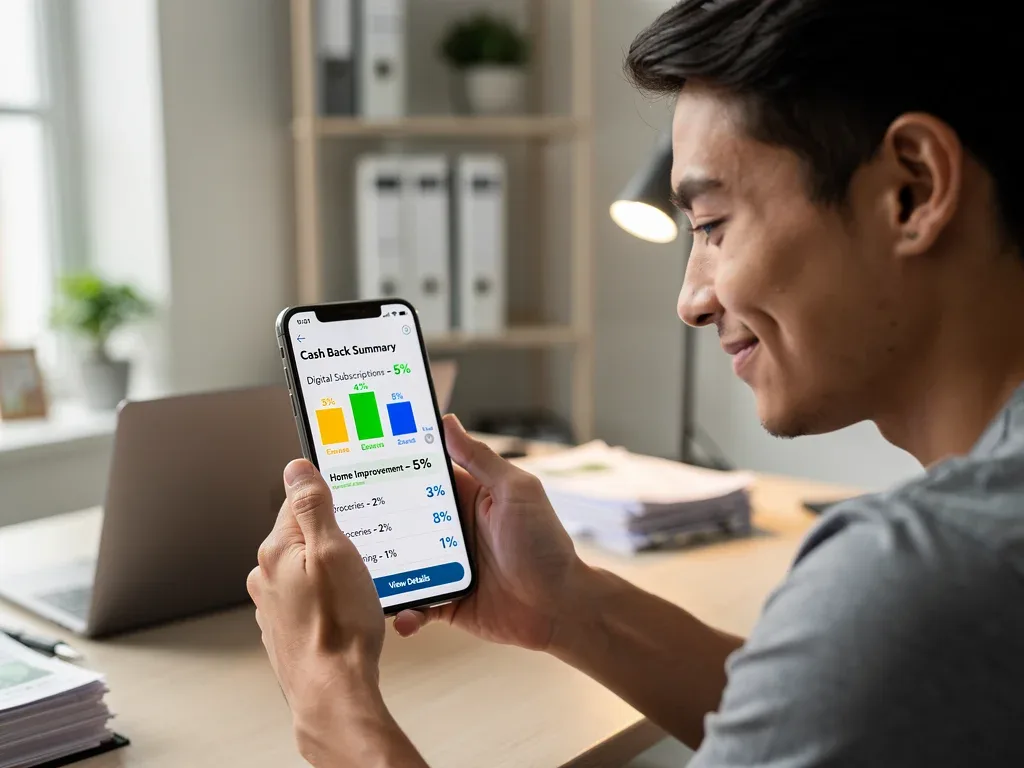
Not Every Entertainment Purchase Qualifies
Discover explicitly excludes or limits several purchases that consumers may casually consider entertainment, including some travel-related packages and third-party ticket transactions.
Merchant classification determines eligibility, making the issuer's category definition more important than the customer's description of the purchase.
This is another reason verified program terms should replace generalized articles about supposed hidden bonus categories.
U.S. Bank Cash+ Uses a Different 5% Model
U.S. Bank Cash+ does not rely on the same issuer-selected rotating calendar used by Chase and Discover.
Instead, cardholders choose two eligible 5% categories each quarter and one separate 2% everyday category.
The first $2,000 in combined eligible net purchases across the selected 5% categories receives the elevated reward rate.
Cash+ Requires Quarterly Category Selection
Cardholders must select their categories each quarter rather than assuming previously chosen options will automatically continue.
U.S. Bank states that eligible purchases begin receiving the additional cash back after the category selection takes effect.
If no categories are selected, eligible purchases generally earn only the standard 1% rate rather than the available 5% bonus.
Verified U.S. Bank Cash+ 5% Categories
Current selectable categories include fast food, electronics stores, TV, internet and streaming services, home utilities and cell phone providers.
Other options include furniture stores, department stores, ground transportation, gyms, select clothing stores, sporting goods stores and movie theaters.
That menu gives cardholders more direct control over reward optimization than a calendar determined entirely by the issuer.
Home Utilities Can Be Especially Powerful
Recurring utility bills can create consistent 5% earning opportunities when the merchant and payment method qualify under U.S. Bank's terms.
Unlike discretionary shopping, utilities represent expenses many households would pay regardless of whether a rewards promotion exists.
This makes them potentially efficient reward categories when the account can be paid without additional processing fees that erase the benefit.
Streaming Is Already a Real Category
The original article predicted digital subscriptions as a possible future 5% category, but U.S. Bank already offers TV, internet and streaming services.
Discover also included select streaming services during the first quarter of 2026, making the category a confirmed reward opportunity rather than speculation.
This illustrates the importance of replacing forecast language with currently available issuer data whenever possible.
There Are No Verified “Hidden” 5% Categories
Issuers may offer targeted promotions or merchant-specific deals, but rotating cash-back categories are normally disclosed through official program pages and account communications.
Calling them “hidden categories” can imply benefits exist secretly when the real challenge is usually activation, merchant coding or finding the correct issuer information.
A stronger strategy is monitoring official calendars and targeted offers instead of searching for unsupported categories that may never exist.
Targeted Offers Are Different From Published Categories
A cardholder may occasionally receive an individualized promotion through an issuer's app, website or email that other customers do not receive.
Those offers should not be generalized into a universal 5% category unless the issuer publishes the promotion for the broader card program.
Always confirm the eligible account, merchant, spending window and cap before changing purchases based on a targeted reward offer.
Merchant Category Codes Determine Many Rewards
Credit card bonus categories usually depend on how a merchant is classified within the payment network rather than the exact product purchased.
A purchase that feels like dining, groceries or entertainment may therefore earn differently when the merchant operates inside another business.
This is one of the most important technical details for consumers trying to maximize credit rewards 2026.
What You Buy Is Not Always What Counts
A supermarket transaction can include household goods and still qualify because the store itself is coded as a grocery merchant.
Conversely, buying groceries at an excluded supercenter may not receive the grocery bonus despite the nature of the products in the cart.
Reward optimization therefore starts with merchant coding and issuer terms rather than analyzing every individual item purchased.
Activation Can Be Worth Real Money
A cardholder spending the full $1,500 quarterly cap in a 5% category earns $75 in total rewards at that rate.
At a 1% base rate, the same spending would generate only $15, making the incremental difference $60 for that quarter.
Missing activation can therefore leave a meaningful amount of cash back unearned without any change in the underlying purchases.
Set Quarterly Reminders
A calendar reminder shortly before each new quarter can help cardholders check categories and complete required activation or selection steps.
This simple process is especially valuable for households managing more than one rotating-category credit card.
Automation reduces the chance that an otherwise valuable reward program becomes ineffective merely because the activation deadline was forgotten.
Track Spending Against Quarterly Caps
Once the bonus limit has been reached, additional spending in that category usually returns to a lower standard reward rate.
Continuing to use the same card after reaching the cap may therefore produce less value than switching to another suitable rewards card.
Cardholder dashboards and budgeting tools can help estimate how much qualifying category spend remains during each quarter.
Do Not Confuse the Cap With the Reward Amount
A $1,500 quarterly cap means up to $1,500 of spending qualifies for 5% rewards, not that the cardholder receives $1,500 cash back.
At 5%, fully utilizing that spending limit produces $75 in gross quarterly cash-back earnings before considering alternative card rewards.
Clear understanding of the cap prevents exaggerated assumptions about the financial value of rotating categories.
Use Multiple Cards Only When It Remains Manageable
Holding several rewards cards can increase earning opportunities, but complexity can also lead to missed payments, forgotten categories or unnecessary spending.
The best portfolio is not necessarily the one with the largest number of cards but the smallest set that covers meaningful household categories.
Every additional account should have a clear role rather than existing merely because another bonus percentage is available.
Always Pay the Statement Balance When Possible
Credit card interest can exceed the value of cash-back rewards by a wide margin when balances revolve from month to month.
Earning an extra few percentage points provides little financial benefit if the purchase later incurs significant interest charges.
Reward optimization should therefore come after responsible budgeting and full, timely payment rather than before them.
Do Not Chase Rewards With Extra Spending
A 5% rebate still means the cardholder pays approximately 95% of a purchase that otherwise would not have been necessary.
Spending $500 only to earn $25 is not a financial gain when the household had no genuine reason to make the purchase.
The strongest rewards strategy redirects existing spending rather than creating new consumption to satisfy a promotional category.
Use Categories for Planned Purchases
A home improvement bonus can be valuable when a repair was already scheduled, while a travel category can help with a preexisting vacation plan.
Timing flexible purchases can make sense when the price remains competitive and the item would have been bought regardless.
Rewards should remain a secondary optimization layered onto an existing budget rather than the reason for the purchase itself.
Compare 5% With Other Card Benefits
A rotating 5% card is not automatically the best payment method when another card provides insurance, extended warranty or purchase protection.
Travel purchases can also be more valuable on cards providing cancellation protection, rental coverage or transferable points.
The best decision sometimes involves accepting slightly lower rewards in exchange for protections worth more than the cash-back difference.
Think in Total Value, Not One Percentage
A 5% headline rate is easy to compare, but annual fees, redemption rules, protections and category limitations can change real-world value.
Cards with lower advertised rates may perform better for households whose spending consistently falls outside rotating quarterly categories.
Calculate rewards based on actual annual spending rather than assuming the highest advertised percentage automatically wins.
Current 2026 Opportunities Are Better Than Speculation
Verified issuer calendars already provide multiple ways to earn 5% without relying on forecasts about smart-home devices or sustainable purchases.
Restaurants, groceries, utilities, transportation, entertainment, streaming and home improvement have all appeared in real 2026 programs.
Focusing on those confirmed categories produces a more reliable strategy for anyone trying to maximize credit rewards 2026.
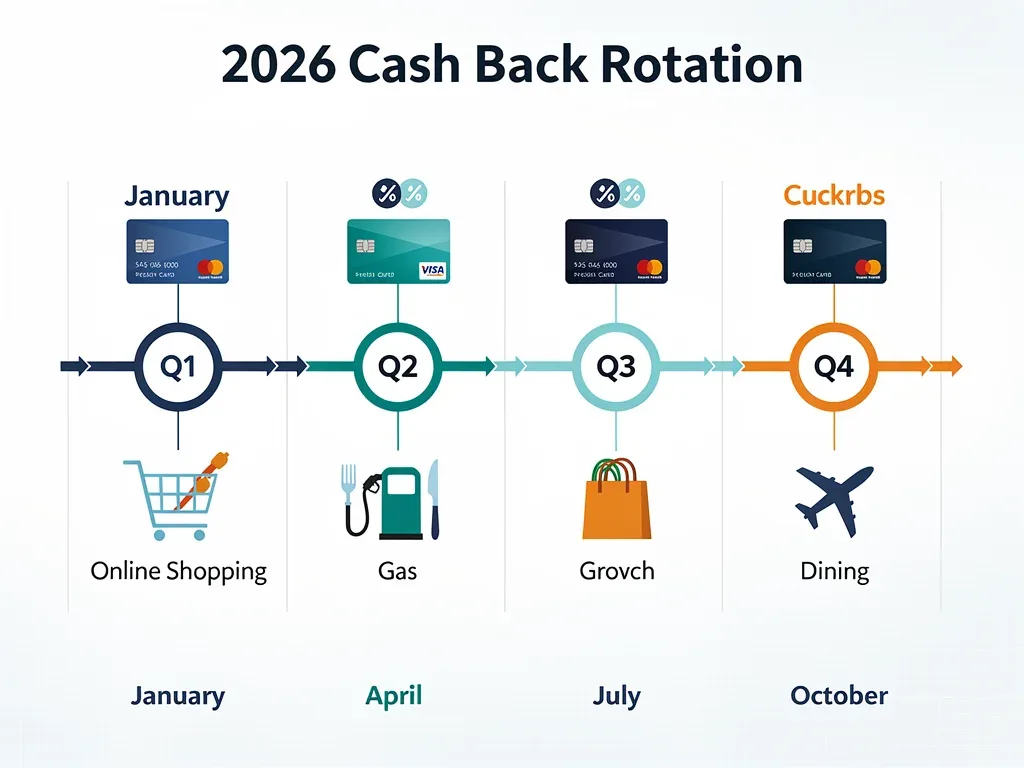
Speculative Categories Can Lead to Poor Planning
Buying a card or delaying purchases because an article predicts a future category can create disappointment when the issuer chooses something else.
Reward calendars change according to issuer strategy, partnerships and program design, making unofficial forecasts inherently uncertain.
Until an issuer publishes a category, treat it as speculation rather than a benefit that should influence financial decisions.
How to Maximize Credit Rewards 2026
Start each quarter by reviewing official category calendars, completing activation requirements and identifying spending already planned within those categories.
Track the applicable spending cap and switch cards when another product offers more value after the elevated rate has been exhausted.
Finally, pay balances responsibly and avoid unnecessary purchases because interest and overspending can easily erase every reward earned.
A Simple Quarterly Routine Works Best
Check issuer announcements, activate or select categories, review upcoming expenses and note which merchants are likely to qualify.
Monitor category spending during the quarter and verify statement rewards if a merchant's classification is uncertain.
Repeat the process every three months rather than trying to predict an entire year's categories from unofficial speculation.
2026 Program | Verified 5% Structure |
|---|---|
Chase Freedom Flex Q4 | Grocery stores, dining and eligible American Red Cross donations; activate; $1,500 combined cap. |
Discover Q4 | Restaurants, entertainment and utilities; activate; $1,500 quarterly cap. |
U.S. Bank Cash+ | Choose two 5% categories each quarter; $2,000 combined eligible-spend cap. |
Activation | Required for rotating programs such as Chase and Discover. |
Best Strategy | Use verified categories for spending already planned and avoid chasing rewards. |
Frequently Asked Questions About 2026 Credit Card Rewards
What are Chase Freedom Flex's Q4 2026 5% categories?
Grocery stores excluding Walmart and Target, dining and eligible American Red Cross donations qualify after activation, up to the combined quarterly cap.
What are Discover's Q4 2026 5% categories?
Discover offers 5% Cashback Bonus at restaurants, entertainment and utilities through December 31 after activation, subject to its $1,500 cap.
Does U.S. Bank Cash+ offer 5% on streaming?
Yes. TV, internet and streaming services are currently among the selectable 5% Cash+ categories.
Are there hidden 5% cash-back categories?
Not as a standard program feature. Issuers may provide targeted offers, but ordinary rotating categories are disclosed through official program communications.
Do I have to activate rotating 5% categories?
Yes for programs such as Chase Freedom Flex and Discover if you want eligible purchases to earn the quarterly elevated rate.
How much can 5% on $1,500 earn?
Five percent of $1,500 equals $75 in total rewards, compared with $15 if the same purchases earned only 1%.
Does every grocery store transaction qualify?
No. Merchant coding and issuer exclusions matter; Chase specifically excludes Walmart and Target from its Q4 2026 grocery category.
Should I open many cards to maximize rewards?
Only when the added accounts remain manageable and provide clear value based on your normal spending patterns.
Is 5% cash back worth carrying a balance?
Generally no. Interest charges on revolving balances can quickly exceed the rewards earned from an elevated cash-back category.
What is the safest way to maximize rewards?
Use verified categories for purchases already in your budget, activate them on time and pay the statement balance responsibly.
Conclusion
To maximize credit rewards 2026, rely on official issuer calendars rather than predictions about supposedly hidden future categories.
Chase, Discover and U.S. Bank already provide substantial verified 5% opportunities across groceries, dining, utilities, transportation, streaming and other categories.
The strongest strategy combines activation, spending-cap tracking, merchant-code awareness and disciplined budgeting without allowing rewards to encourage unnecessary debt.
Readers comparing broader reward strategies can also review this guide on how to maximize 2026 credit card rewards.