CFPB Priorities 2026: 5 Key US Credit Market Focus Areas
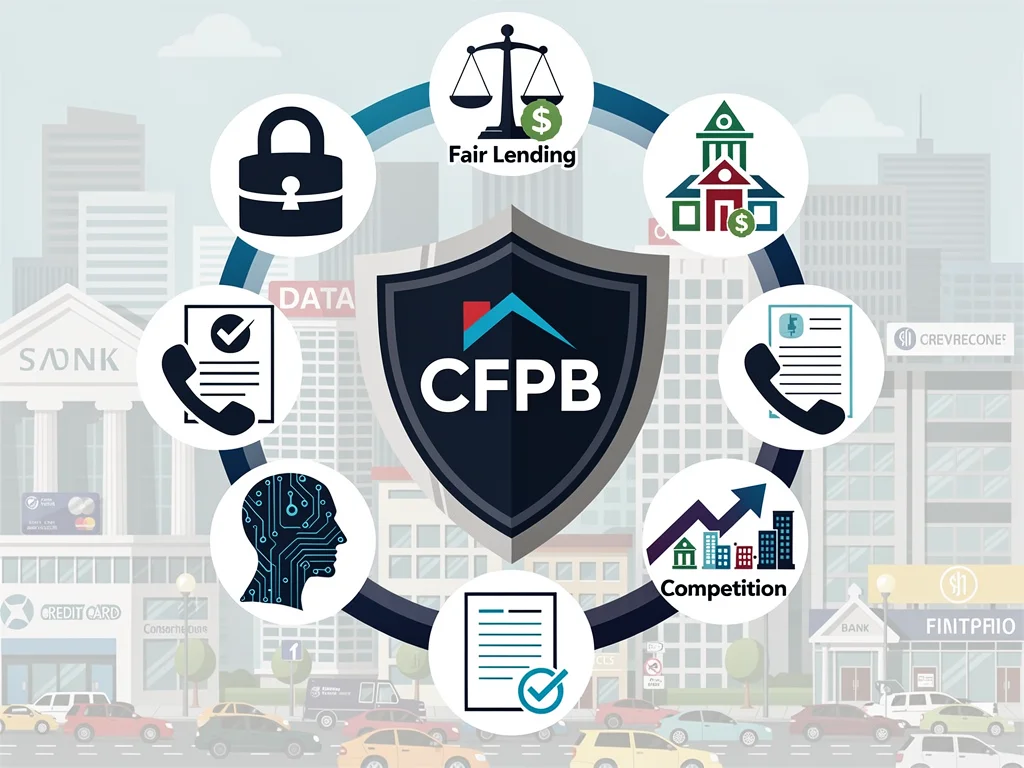
The Consumer Financial Protection Bureau (CFPB) is setting its sights on five crucial areas for 2026, aiming to reshape US credit markets by enhancing consumer protection, promoting fair access, and ensuring financial stability.
Por: Maria Eduarda em 20 de fevereiro de 2026
Última atualização em: 26 de junho de 2026
Advertisements
The Consumer Financial Protection Bureau (CFPB) is setting its sights on five crucial areas for 2026, aiming to reshape US credit markets by enhancing consumer protection, promoting fair access, and ensuring financial stability.
The landscape of credit markets in the United States is constantly evolving, and a significant force guiding this evolution is the Consumer Financial Protection Bureau (CFPB). As we look towards 2026, understanding the CFPB Priorities 2026 is not just for regulatory compliance but also for anticipating shifts in consumer financial products and services. These priorities will undoubtedly influence everything from lending practices to debt collection, fostering a more transparent and equitable financial ecosystem for American consumers.
Advertisements
Enhancing Consumer Protection in Digital Lending
The rapid digitalization of financial services has brought unprecedented convenience, but also new avenues for consumer vulnerability. The CFPB’s focus on enhancing consumer protection in digital lending for 2026 is a critical response to these evolving challenges. This includes scrutinizing algorithms, data usage, and disclosure practices in online loans, ensuring that innovation does not come at the expense of fairness or transparency.
Digital lending platforms, from online personal loans to buy-now-pay-later (BNPL) services, leverage vast amounts of data and sophisticated algorithms to assess creditworthiness and offer products. While this can streamline access to credit, it also raises concerns about potential biases and opaque decision-making processes. The CFPB aims to ensure these digital tools are used responsibly.
Algorithmic Bias and Fair Lending
One of the primary concerns within digital lending is the potential for algorithmic bias. Algorithms, if not carefully designed and monitored, can inadvertently perpetuate or even amplify existing societal biases, leading to discriminatory outcomes for certain consumer groups.
Data Scrutiny: The CFPB will examine the types of data inputs used in lending algorithms to identify and mitigate proxies for protected characteristics.
Transparency Requirements: Lenders may face increased pressure to provide clearer explanations for credit decisions, especially when those decisions are automated.
Auditing and Oversight: Regulators are likely to demand regular audits of algorithmic models to ensure they adhere to fair lending laws and do not result in disparate impact.
The goal is to foster an environment where technology serves to expand access to credit fairly, rather than creating new barriers. This includes ensuring that machine learning models are explainable and their outcomes are predictable and non-discriminatory. The CFPB’s approach will likely involve a combination of enforcement actions, guidance, and potentially new rulemaking to address these complex issues.
Data Privacy and Security in Digital Transactions
As consumers increasingly share sensitive financial information online, the importance of robust data privacy and security measures cannot be overstated. The CFPB is prioritizing the protection of this data, recognizing that breaches or misuse can have severe consequences for individuals.
Enhanced Safeguards: Expect stricter requirements for how digital lenders collect, store, and share consumer financial data.
Consent Mechanisms: The agency will likely push for more explicit and understandable consent mechanisms for data usage, giving consumers greater control.
Breach Notification: Regulations around timely and comprehensive notification of data breaches may be strengthened to protect consumers from identity theft and fraud.
This focus extends beyond traditional lenders to include emerging FinTech companies that handle consumer data. The CFPB seeks to establish clear expectations for data stewardship across the digital lending ecosystem, emphasizing accountability for protecting sensitive personal and financial information. This will help build trust in digital financial products and encourage their safe adoption.
Ultimately, the CFPB’s deepened engagement with digital lending aims to strike a balance between fostering innovation and safeguarding consumer rights. By addressing algorithmic bias and bolstering data security, the Bureau intends to create a more trustworthy and equitable digital credit market for all Americans.
Promoting Fair and Accessible Credit for All
Ensuring that all consumers have fair and accessible credit opportunities is a cornerstone of the CFPB’s mission, and for 2026, this priority will see renewed emphasis. This involves addressing systemic barriers that disproportionately affect vulnerable populations and fostering a credit environment where merit, not background, dictates access. The agency is committed to dismantling discriminatory practices and promoting inclusive lending.
Despite advancements, significant disparities in credit access and cost persist across various demographic groups. The CFPB aims to tackle these inequities head-on, recognizing that fair access to credit is fundamental for economic mobility and stability. This involves a comprehensive approach that looks beyond overt discrimination to more subtle, yet equally harmful, barriers.
Combating Discriminatory Practices
The CFPB will intensify its efforts to identify and combat discriminatory practices within the credit market. This includes scrutinizing lending patterns, marketing strategies, and product offerings to ensure compliance with fair lending laws such as the Equal Credit Opportunity Act (ECOA).
Redlining Enforcement: Increased focus on identifying and prosecuting redlining practices, where lenders avoid providing services to residents of certain neighborhoods based on race or ethnicity.
Bias in Underwriting: Deeper examination of underwriting criteria and models to detect and eliminate any inherent biases that disadvantage protected classes.
Targeted Outreach: Initiatives to ensure that credit products are marketed and made available to all eligible consumers, regardless of their background.
These efforts are crucial for creating a level playing field where every qualified applicant has an equal chance to obtain credit. The CFPB’s enforcement actions and supervisory activities will serve as a strong deterrent against discriminatory behavior, reinforcing the principle that credit decisions must be based solely on financial merit.
Expanding Access to Affordable Small-Dollar Credit
Access to affordable small-dollar credit remains a significant challenge for many Americans, often leading them to high-cost alternatives like payday loans or title loans. The CFPB aims to promote safer and more affordable options for consumers needing short-term financial relief.
Responsible Lending Standards: Encouraging financial institutions to offer small-dollar loans with reasonable rates and terms, avoiding debt traps.
Innovative Product Development: Supporting the development of new, responsible small-dollar credit products that meet consumer needs without excessive fees or interest.
Partnerships and Pilot Programs: Exploring collaborations with community banks, credit unions, and non-profit organizations to expand access to safe credit alternatives.
By expanding access to affordable small-dollar credit, the CFPB seeks to provide consumers with viable alternatives to predatory lending. This will not only protect vulnerable individuals but also foster greater financial resilience across communities. The Bureau’s holistic approach to fair and accessible credit underscores its commitment to ensuring that the credit market truly serves the needs of all Americans.
Supervising Debt Collection and Credit Reporting
Debt collection and credit reporting are two critical areas that profoundly impact consumers’ financial lives. For 2026, the CFPB is sharpening its focus on these sectors to ensure fair practices, accuracy, and transparency. Millions of Americans interact with debt collectors and rely on their credit reports, making robust oversight essential for consumer protection.
Misinformation, aggressive tactics, and unfair practices in debt collection and credit reporting can lead to significant financial distress, impacting individuals’ ability to secure housing, employment, and future credit. The CFPB’s heightened scrutiny aims to rectify these issues and empower consumers with accurate information and fair treatment.
Reforming Debt Collection Practices
The CFPB will continue its efforts to reform debt collection practices, building on existing regulations and addressing new challenges. This includes tackling issues arising from digital communication and ensuring consumers are not harassed or misled.
Digital Communication Guidelines: Providing clarity and enforcing rules around debt collectors’ use of emails, text messages, and social media to contact consumers.
Harassment and Abuse Prevention: Intensifying enforcement against collectors who engage in abusive, deceptive, or unfair practices.
Dispute Resolution: Ensuring that consumers have clear and effective avenues to dispute debts and that collectors respond appropriately and promptly.
The agency’s goal is to create a debt collection environment that is respectful, transparent, and compliant with consumer protection laws. This will help reduce the stress and financial burden that often accompany debt collection interactions, ensuring a more humane process for consumers.
Ensuring Accuracy in Credit Reporting
Accurate credit reports are fundamental to consumers’ financial health. Errors can lead to denied credit, higher interest rates, and significant financial setbacks. The CFPB is prioritizing efforts to ensure the integrity and accuracy of credit reporting systems.
Data Furnisher Accountability: Holding data furnishers (e.g., lenders, creditors) more accountable for the accuracy of the information they provide to credit bureaus.
Dispute Handling Improvements: Requiring credit bureaus to improve their processes for investigating and resolving consumer disputes in a timely and effective manner.
Emerging Data Sources: Examining the use of alternative data in credit reporting and scoring to ensure fairness and accuracy, particularly for consumers with limited traditional credit history.
By focusing on these areas, the CFPB aims to bolster consumer confidence in credit reporting and ensure that credit decisions are based on reliable and accurate information. This is vital for maintaining a fair and functional credit market, allowing consumers to access financial products based on their true creditworthiness.
Addressing Emerging Technologies and Innovation
The rapid pace of technological innovation in financial services presents both immense opportunities and significant regulatory challenges. For 2026, the CFPB is committed to proactively addressing emerging technologies and fostering responsible innovation in the credit market. This means understanding new products and services, assessing their risks and benefits, and ensuring they align with consumer protection principles.
From artificial intelligence to blockchain, new technologies are reshaping how consumers access, use, and manage credit. The CFPB recognizes the potential for these innovations to improve efficiency and expand access, but also the need to guard against new forms of exploitation or systemic risks. Their approach will be to monitor closely and engage with innovators to guide responsible development.
Regulating Artificial Intelligence (AI) in Lending
Artificial intelligence is increasingly used in credit underwriting, fraud detection, and customer service. The CFPB’s focus will be on understanding and regulating the ethical and fair use of AI in lending decisions.
Transparency and Explainability: Pushing for greater transparency in how AI models make credit decisions, ensuring consumers can understand adverse action notices.
Bias Detection and Mitigation: Developing frameworks and tools to identify and mitigate potential biases in AI algorithms that could lead to discriminatory outcomes.
Accountability for AI Outcomes: Clarifying responsibility when AI systems make errors or produce unfair results, ensuring consumers have recourse.
The goal is to harness the power of AI to improve financial services while simultaneously protecting consumers from its potential pitfalls. This will require a nuanced regulatory approach that encourages innovation while upholding fair lending laws and consumer rights. The CFPB is likely to issue guidance and collaborate with industry stakeholders to establish best practices for AI in finance.
Oversight of Buy-Now-Pay-Later (BNPL) Services
Buy-now-pay-later (BNPL) services have surged in popularity, offering consumers flexible payment options at the point of sale. The CFPB is increasing its oversight of these services to ensure they are transparent, fair, and do not lead consumers into unmanageable debt.
Disclosure Requirements: Ensuring BNPL providers clearly disclose terms, fees, and potential consequences of missed payments to consumers.
Data Collection and Reporting: Examining how BNPL data is collected, used, and reported to credit bureaus, and its impact on consumer credit scores.
Complaint Resolution: Establishing clear mechanisms for consumers to resolve disputes or issues with BNPL providers.
The rapid growth of BNPL has highlighted a gap in traditional regulatory frameworks. The CFPB aims to bring these services under appropriate scrutiny, ensuring they operate responsibly and protect consumers from hidden fees or unexpected debt accumulation. This proactive approach to emerging technologies reflects the CFPB’s commitment to staying ahead of the curve in a dynamic financial landscape.
Fostering Competition and Preventing Monopolies
A healthy, competitive market is vital for consumers, driving down costs, improving service quality, and spurring innovation. For 2026, the CFPB is intensifying its efforts to foster competition and prevent monopolistic practices within the US credit markets. This priority aims to break down barriers to entry for new players and ensure that established institutions do not stifle beneficial competition.
Concentration in financial services can lead to fewer choices for consumers, higher fees, and reduced responsiveness to customer needs. The CFPB believes that by promoting vigorous competition, it can empower consumers and ensure a more dynamic and equitable financial system. This involves scrutinizing market structures and addressing anti-competitive behaviors.
Analyzing Market Concentration and Practices
The CFPB will conduct deeper analyses of market concentration across various credit product categories, looking for signs of reduced competition that could harm consumers. This includes examining the dominance of a few large players and their impact on pricing and service.
Merger and Acquisition Review: Collaborating with other federal agencies to review financial sector mergers and acquisitions for potential anti-competitive effects.
Behavioral Scrutiny: Investigating practices that might unfairly disadvantage smaller competitors or new entrants, such as exclusive partnerships or data hoarding.
Price and Fee Monitoring: Closely monitoring pricing structures and fees in concentrated markets to identify instances where a lack of competition leads to inflated costs for consumers.
By understanding the competitive landscape, the CFPB can take targeted actions to address areas where market forces are not adequately serving consumers. This proactive approach helps ensure that consumers benefit from a vibrant and diverse credit market, with multiple options and competitive offerings.
Promoting Open Banking and Data Portability
Open banking, which allows consumers to securely share their financial data with third-party providers, is a key driver of competition. The CFPB is advocating for policies that promote data portability and interoperability, enabling consumers to switch providers more easily and access innovative new services.
Data Access Rules: Developing rules that mandate financial institutions to provide consumers with secure access to their financial data, facilitating its sharing with authorized third parties.
Standardized APIs: Encouraging the adoption of standardized Application Programming Interfaces (APIs) to ensure seamless and secure data exchange between financial services providers.
Consumer Control: Emphasizing consumer consent and control over their financial data, ensuring they have the power to decide who accesses their information and for what purpose.
Promoting open banking and data portability is a strategic move by the CFPB to foster a more dynamic and competitive credit ecosystem. By making it easier for consumers to move their financial data, the Bureau aims to reduce switching costs and encourage new, innovative financial products and services. This will ultimately benefit consumers through greater choice, lower costs, and better-tailored financial solutions.
Protecting Vulnerable Populations from Predatory Practices
A core tenet of the CFPB’s mission is to protect the most vulnerable segments of the population from predatory financial practices. For 2026, this priority will be amplified, with targeted efforts to shield financially insecure individuals, the elderly, students, and military service members from exploitation in the credit markets. These groups often face unique challenges and can be disproportionately affected by unfair or deceptive financial products.
Predatory practices thrive where consumers lack information, resources, or alternatives. The CFPB aims to close these gaps through robust enforcement, education, and policy development, ensuring that financial products and services are safe and fair for everyone, especially those most at risk. This involves understanding the specific vulnerabilities of these groups and crafting tailored protections.
Targeting High-Cost Lending and Debt Traps
The CFPB will intensify its focus on high-cost lending products that can trap consumers in cycles of debt. This includes payday loans, auto title loans, and certain installment loans that carry exorbitant interest rates and fees.
Enforcement Actions: Pursuing aggressive enforcement against lenders who offer products designed to exploit desperate consumers, violating usury laws or consumer protection statutes.
Alternative Product Promotion: Working to promote and expand access to responsible, lower-cost credit alternatives for consumers needing short-term funds.
Disclosure Clarity: Ensuring that all terms, fees, and risks associated with high-cost loans are clearly and conspicuously disclosed to consumers before they commit.
By cracking down on predatory lending, the CFPB seeks to dismantle business models that profit from consumer desperation. This is crucial for protecting financially vulnerable individuals from spiraling debt and helping them build a more stable financial future. The Bureau’s vigilance in this area remains a critical defense for those with limited financial options.
Safeguarding Military Service Members and Veterans
Military service members and veterans are often targets of specific predatory lending schemes due to their stable income and unique financial situations. The CFPB has a dedicated focus on protecting this population, enforcing the Military Lending Act (MLA) and other relevant regulations.
MLA Compliance: Ensuring strict adherence to the Military Lending Act, which caps interest rates and prohibits certain terms for loans to active-duty service members and their dependents.
Targeted Scams: Investigating and taking action against scams and deceptive practices specifically aimed at military personnel, such as bogus investment opportunities or high-cost credit products.
Financial Education: Collaborating with military aid societies and other organizations to provide financial literacy and resources tailored to service members’ needs.
The CFPB’s commitment to military consumers reflects a recognition of their service and their unique vulnerabilities to financial exploitation. By enforcing strong protections and offering educational resources, the Bureau aims to ensure that those who serve our country are not preyed upon by unscrupulous financial actors. This dedicated focus underscores the CFPB’s broad mandate to protect all consumers, with a particular emphasis on those who need it most.
Enhancing Transparency and Accountability in Servicing
The servicing of financial products, particularly mortgages and student loans, represents a critical touchpoint for consumers. For 2026, the CFPB is placing a strong emphasis on enhancing transparency and accountability in servicing practices. This includes ensuring that servicers treat consumers fairly, provide accurate information, and offer appropriate assistance when borrowers face financial hardship.
Poor servicing practices can lead to significant consumer harm, including wrongful foreclosures, payment errors, and inadequate support during times of distress. The CFPB recognizes that even after a loan is originated, the ongoing relationship with the servicer can make or break a consumer’s financial well-being. Therefore, robust oversight in this area is paramount.
Improving Mortgage Servicing Standards
Mortgage servicing has historically been a source of consumer complaints, especially during economic downturns. The CFPB will continue to refine and enforce standards to ensure fair and transparent practices for homeowners.
Loss Mitigation Options: Requiring servicers to provide clear information about loss mitigation options (e.g., loan modifications, forbearance) and to process applications efficiently and fairly.
Communication Standards: Mandating timely, accurate, and understandable communication with borrowers regarding their mortgage accounts, payment changes, and escrow adjustments.
Complaint Resolution: Ensuring that servicers have effective processes for handling consumer complaints and disputes, and that these are resolved promptly and equitably.
By reinforcing these standards, the CFPB aims to prevent unnecessary foreclosures and help homeowners navigate financial challenges with dignity. The focus is on ensuring that servicers act as facilitators of homeownership, rather than obstacles, particularly for those struggling to make payments.
Oversight of Student Loan Servicing
Student loan debt is a significant burden for millions of Americans, and effective servicing is crucial for borrowers to manage their obligations. The CFPB will deepen its oversight of student loan servicers to protect borrowers from predatory or confusing practices.
Income-Driven Repayment (IDR) Access: Ensuring servicers clearly inform borrowers about income-driven repayment plans and facilitate enrollment for eligible individuals.
Payment Processing Accuracy: Holding servicers accountable for accurately processing payments, allocating them correctly, and providing clear statements.
Default Prevention: Encouraging servicers to proactively engage with struggling borrowers to explore options that prevent default, such as deferment or forbearance.
The CFPB’s commitment to overseeing student loan servicing is vital for helping borrowers successfully navigate their repayment journeys. By promoting transparency and accountability, the Bureau aims to reduce confusion, prevent unnecessary defaults, and ensure that student loan servicers are truly assisting borrowers, not hindering them. This comprehensive approach to servicing highlights the CFPB’s dedication to protecting consumers throughout the entire lifecycle of their financial products.
Key Priority
Brief Description
Digital Lending Protection
Safeguarding consumers from algorithmic bias and data privacy risks in online credit.
Fair Credit Access
Combating discrimination and expanding affordable small-dollar credit options for all.
Debt Collection & Reporting
Ensuring fair debt collection practices and accuracy in credit reporting systems.
Emerging Tech Oversight
Regulating AI in lending and overseeing BNPL services for consumer safety.
Frequently Asked Questions about CFPB Priorities 2026
What are the main goals of the CFPB’s 2026 priorities?▼
The CFPB’s main goals for 2026 are to enhance consumer protection in digital lending, promote fair credit access, improve oversight of debt collection and credit reporting, address emerging financial technologies, and foster greater competition within US credit markets. These aims collectively seek to create a more equitable and transparent financial system.
How will digital lending be impacted by the CFPB’s focus?▼
Digital lending will face increased scrutiny regarding algorithmic bias and data privacy. The CFPB intends to ensure algorithms are fair and non-discriminatory, and that consumer data is securely handled with explicit consent. This could lead to stricter disclosure requirements and more rigorous auditing of automated lending decisions.
What measures will the CFPB take to ensure fair credit access?▼
To ensure fair credit access, the CFPB plans to combat discriminatory practices like redlining and bias in underwriting. They will also work to expand access to affordable small-dollar credit options, encouraging responsible lending standards and supporting innovative products that serve vulnerable populations without predatory terms.
How will the CFPB address emerging technologies like AI and BNPL?▼
The CFPB will regulate AI in lending by pushing for transparency, bias detection, and accountability. For Buy-Now-Pay-Later (BNPL) services, they will focus on clear disclosures, data collection practices, and effective complaint resolution. The goal is to maximize innovation benefits while protecting consumers from new risks.
Why is fostering competition a key priority for the CFPB?▼
Fostering competition is a key priority because it drives down costs, improves service quality, and encourages innovation for consumers. The CFPB aims to prevent monopolies by analyzing market concentration, reviewing mergers, and promoting open banking and data portability to empower consumers with more choices and better financial products.
Conclusion
The CFPB Priorities 2026 represent a comprehensive strategic roadmap designed to reshape the US credit markets for the benefit of all consumers. By focusing on critical areas such as digital lending protection, fair credit access, rigorous oversight of debt collection and reporting, responsible integration of emerging technologies, and robust market competition, the Bureau is striving for a financial ecosystem that is both innovative and equitable. These priorities underscore the CFPB’s unwavering commitment to consumer protection, ensuring that as the financial landscape evolves, the foundational principles of fairness, transparency, and accountability remain at its core. Businesses and consumers alike should prepare for a period of heightened regulatory engagement aimed at fostering a more secure and just credit environment.
A journalism student and passionate about communication, she has been working as a content intern for 1 year and 3 months, producing creative and informative texts about decoration and construction. With an eye for detail and a focus on the reader, she writes with ease and clarity to help the public make more informed decisions in their daily lives.